


 Cart
Cart
 sales@molnova.com



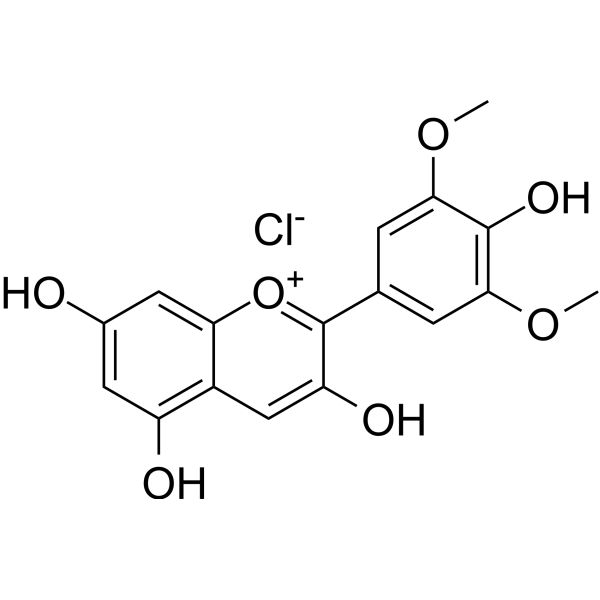
Malvidin chloride
CAS No. 643-84-5
Malvidin chloride( —— )
Catalog No. M31183 CAS No. 643-84-5
Malvidin chloride has anti-spermatogenic, and antioxidant activities. It can prevent endothelial dysfunction by inhibiting ROS and XO-1.
Purity : >98% (HPLC)
 COA
Datasheet
HNMR
HPLC
MSDS
Handing Instructions
COA
Datasheet
HNMR
HPLC
MSDS
Handing Instructions
| Size | Price / USD | Stock | Quantity |
| 5MG | 351 | In Stock |


|
| 50MG | Get Quote | In Stock |
|
| 100MG | Get Quote | In Stock |
|
Biological Information
-
Product NameMalvidin chloride
-
NoteResearch use only, not for human use.
-
Brief DescriptionMalvidin chloride has anti-spermatogenic, and antioxidant activities. It can prevent endothelial dysfunction by inhibiting ROS and XO-1.
-
DescriptionMalvidin chloride has anti-spermatogenic, and antioxidant activities. It can prevent endothelial dysfunction by inhibiting ROS and XO-1.
-
In VitroMalvidin (0~80 μg/mL; 96 hours; U937 cells) shows cytotoxic activity in a dose-dependent pattern.The IC50 value of Malvidin for U937 cells is 40 μg/mL. Malvidin (U937 cells) shows arrest at the G2/M phase of the cell cycle and increases sub G1 hypo-diploid population.Cell Viability Assay Cell Line:U937 cells Concentration:0~80 μg/mL Incubation Time:96 hours Result:Showed cytotoxic activity in a dose-dependent pattern.
-
In Vivo——
-
Synonyms——
-
PathwayOthers
-
TargetOther Targets
-
Recptor——
-
Research Area——
-
Indication——
Chemical Information
-
CAS Number643-84-5
-
Formula Weight366.8
-
Molecular FormulaC17H15ClO7
-
Purity>98% (HPLC)
-
Solubility——
-
SMILES——
-
Chemical Name——
Shipping & Storage Information
-
Storage(-20℃)
-
ShippingWith Ice Pack
-
Stability≥ 2 years
Reference
molnova catalog



related products
-
Caspase 1 Substrate ...
Caspase 1 Substrate 1 (ICE), chromogenic; Ac-YEVD-pNA
-
Rebaudioside N
Rebaudioside N is a natural product.
-
PAC1R antagonist 1
PAC1R antagonist 1 is an orally active PAC1 receptor antagonist that inhibits abnormal pain induced by pituitary adenylate cyclase-activating polypeptide (PACAP) and nerve damage, and may be used in the study of neoplasms and immune-related disorders.
